Newbold Verdon Hall 1623-1767
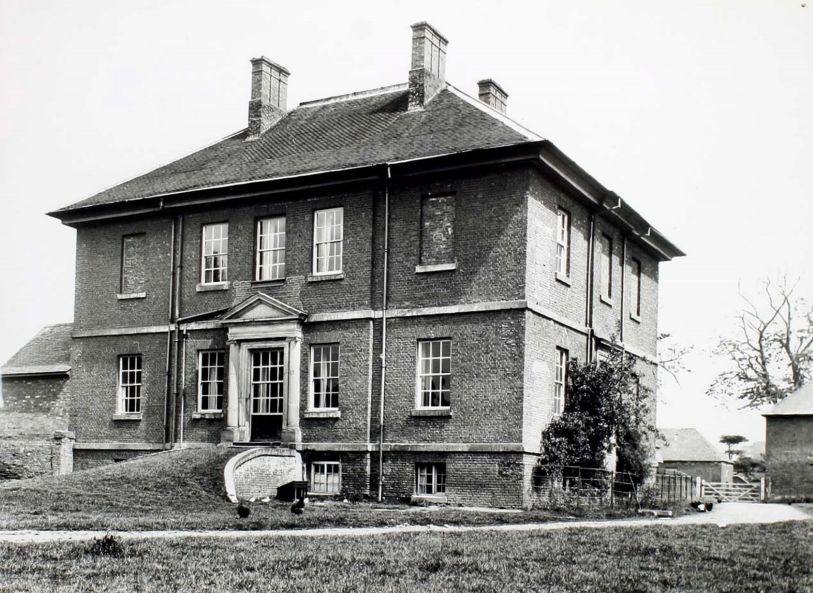
Newbold Verdon Hall is one of fewer than 10,000 Grade I listed buildings in England. Researcher Roger King traces the remarkable families who owned the Hall across 144 years of English history — from a Speaker of the House of Commons to a pioneering smallpox campaigner whose work changed medicine forever.
Of the 380,000 listed heritage assets in England, only 2.5 per cent carry Grade I status. Newbold Verdon Hall is among them. Historic England’s listing acknowledges the Bishop of Durham who had it built, but offers little explanation of why a modest country house in a West Leicestershire village should qualify as nationally significant. The answer, it turns out, lies not in the building itself but in the extraordinary people who owned it.
The Crewe Family — 1623 to 1721
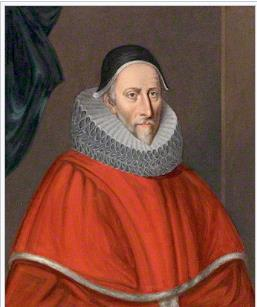
The Hall’s recorded history begins in 1623, when Thomas Crewe — lawyer, politician and Speaker of the House of Commons — purchased the house and manor from a Nicholas Hearne. Thomas was already one of the most powerful men in England, appointed Speaker by King James I the same year he acquired the Newbold estate. When Charles I succeeded his father in 1625, the new king’s demands for taxes to fund his wars brought Thomas into direct conflict with Parliament and his role as Speaker came to an end.
Thomas appears to have used Newbold Verdon largely as a managed estate rather than a residence — there are no records of him visiting during the eleven years he owned it before his death in 1634.
His son John inherited the manor and proved to be a figure of even greater historical significance. A committed Protestant parliamentarian, John witnessed the English Civil War at close quarters. In 1647 he was one of the commissioners charged with holding King Charles I in custody at Holdenby Hall, Northamptonshire. A year later he was physically barred from Parliament by Colonel Thomas Pride — one of the 120 MPs prevented from voting on whether the King should stand trial for treason. John’s principled opposition to regicide would later be rewarded: when Charles II was restored to the throne in 1660, it was John who sat on the parliamentary commission that negotiated the King’s return, and he received his barony in recognition.
Upon John’s death in 1679, Newbold passed eventually to his youngest surviving son, Nathaniel — the man who left the most visible mark on the village. A close friend of both Charles II and his brother the future James II, Nathaniel had risen rapidly through the Church of England to become Prince Bishop of Durham at only forty-one, the third highest ecclesiastical position in the land. He also held the role of Clerk of the Closet — the monarch’s chief adviser on all religious and church matters — for nearly twenty years.
When the Glorious Revolution of 1688 deposed James II, Nathaniel’s loyalty to the old king put him in considerable danger. He quietly withdrew from public life and, according to contemporary accounts, spent several months at Newbold Verdon while the political situation resolved itself. He survived, retained his bishopric and eventually rebuilt his standing under Queen Anne.
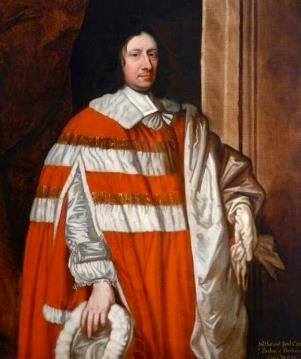
It was Nathaniel who commissioned the Hall we see today — a compact double-pile country house built around 1700, described by English Heritage as a convenient stopping point on the fourteen-day journey between his palace in Durham, his estate at Steane in Northamptonshire and his London home. He married twice: first to Penelope Frowde in 1691, then after her death to the much younger Dorothy Forster, joint heiress to Bamburgh Castle. Their marriage, though unconventional in its age gap, was by all accounts a happy one.
Nathaniel died in 1721 at the age of eighty-eight. His will directed that funds be set aside for a school and schoolmaster in Newbold Verdon — the origin of what became the Lord Crewe Trust Fund, which still supports the education of village children today. The school he funded stood on what is now the site of the war memorial and gardens.
James Montagu — 1721 to 1748
Nathaniel bequeathed the Hall and manor to his great-nephew James Montagu, who came to live in Newbold Verdon for the remaining twenty-seven years of his life. A contemporary letter from the writer Elizabeth Montagu — queen of the literary Bluestockings — captures the state in which he found the estate:
“It was a very bad place when Lord Crewe left it to him and had no ornament but fine wood. Now there is water in great beauty, grand avenues from every point, fine young plantations, and in short, everything that can please the eye.”
James invested heavily in the Hall and grounds, commissioning landscaped gardens complete with a formal parterre, ornamental avenues, fishponds and a sunken garden. He also left £100 in his will — equivalent to around £19,000 today — to support what he called the Industrious Poor of the parish. Land was purchased with this bequest, the proceeds to be distributed annually to those in need. The Montagu Charity, as it became known, is still active in the village today, managing the allotments on Brascote Lane that have been part of its work for over two centuries.
The Wortley Montagus — 1748 to 1767
On James Montagu’s death in 1748, the Hall passed to his cousin Sir Edward Wortley Montagu and, on Sir Edward’s death in 1761, to Lady Mary Wortley Montagu — one of the most remarkable women of the eighteenth century.
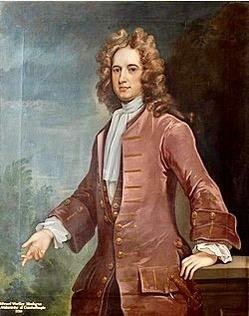
Lady Mary had been born Lady Mary Pierrepont, daughter of a wealthy Nottinghamshire family. She and Edward had eloped in 1712, defying her father’s plans for an arranged marriage. Four years later they were travelling to Constantinople, where Edward had been appointed ambassador to the Ottoman Empire. The letters she wrote home during this period — later published as the Turkish Embassy Letters — gave English readers an unprecedented insight into Ottoman society from a woman’s perspective.
It was in Constantinople that Lady Mary witnessed something that would change the course of medical history. Attending what the Turks called a smallpox party, she watched as an elderly woman used a needle dipped in material taken from a mild smallpox case to scratch small quantities into the skin of those present. Far from giving the guests the disease, the procedure appeared to protect them from it.
“She approached one of the guests, inquired about which vein he wanted opened, and scratched it with a needle til the blood came. She then brought out a nutshell from beneath her skirts inside which was pus from an open smallpox pustule.”
— Lady Mary Wortley Montagu, letter to a friend, Constantinople, 1718
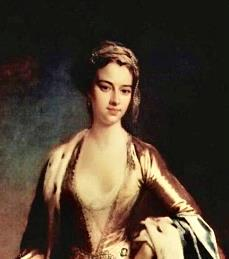
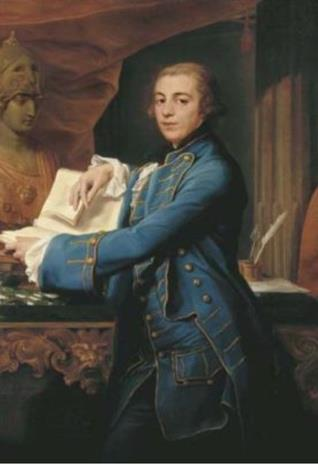
Lady Mary was convinced she had witnessed something extraordinary. In March 1718 she had her own son inoculated — he became the first British person to receive what would later be called variolation. Back in London, when a serious smallpox outbreak began in 1721, she demonstrated the procedure’s safety at a gathering that included members of the royal family. Despite fierce resistance from the medical establishment, variolation was practised in Britain for the next seventy-five years, directly paving the way for Edward Jenner’s development of vaccination in 1796. When the World Health Organisation declared smallpox eradicated in 1980, Lady Mary Wortley Montagu was among those acknowledged as having played a foundational role in that achievement — two and a half centuries earlier.
Lady Mary inherited Newbold Verdon from Sir Edward in 1761 while living in Venice. She returned to England in failing health and died in London in 1762, just twenty-one months after her husband.
The Wayward Son — and the End of an Era
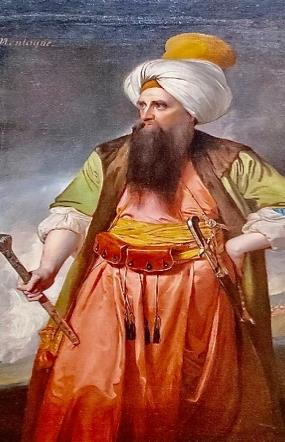
The Hall passed to Lady Mary’s son, Edward Wortley Montagu Junior, a man whose life defied almost every convention of his age. As a child he ran away from Westminster School on multiple occasions — once being found crying fish at Blackwall Docks, once discovered working in the vineyards of Portugal. As an adult he was variously described as a womaniser, gambler, polyglot, archaeologist, soldier and, in his final years in Venice, as a man who dressed in the manner of an Ottoman noble and lived with the manners and magnificence of a Turk.
The life he led was an expensive one. In 1767, to settle his debts, he sold the Hall and manor of Newbold Verdon for £19,655 — around £2.8 million in today’s money — to two Leicester bankers, Joseph Bunney and Thomas Pares. Neither lived at the Hall. It was let as a farmhouse and farm, ending 144 years of occupation by the Crewe, Montagu and Wortley families, and closing one of the most quietly remarkable chapters in the village’s long history.
This is an extract from a paper which was originally presented as a talk to members of the U3A at
St James’ Church Hall, 19th November 2025. Author: Roger King. Published on the Newbold Verdon Parish Archive website with the author’s permission. A fully referenced extensive version of the paper is available to download below.